
The Sustainable Growth Coalition wants to know: Is your emissions data working for you?
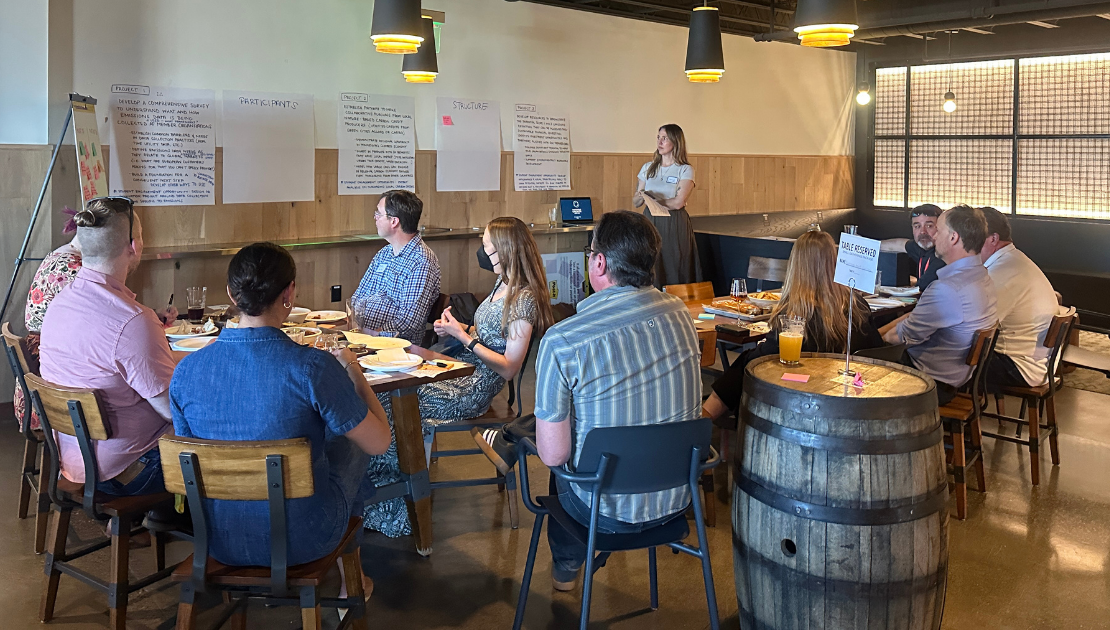
In 2026, the Sustainable Growth Coalition — a multi-sector partnership of 15 Minnesota businesses and organizations hosted by Environmental Initiative — is led by Angie Trygg and Megan Dobratz of Native Sustainability, who are focused on deepening member connection and moving priority projects forward. Members are building an interactive ecosystem map to make it easier to find each other and leverage shared expertise, and regular Regenerate sessions bring the group together in person to move ideas into action.
Emissions rose quickly to the top of member priorities in early Regenerate sessions, and it’s easy to see why. Many member organizations are already collecting greenhouse gas data, but often in different ways, against different frameworks, and with different levels of confidence in their results. Customers are asking for data that’s hard to provide. Reporting obligations are shifting. Doing it well takes significant staff time, and the results often still don’t speak to leadership.
The Coalition’s 2026 emissions project starts by getting a clear picture of where members stand. A survey will map what data is being collected, how it’s being used, and where the common barriers are, from accessing real-time utility data to identifying which staff members should be involved. The project will also catalog which mandatory and voluntary reporting frameworks members are working with, from the GHG Protocol to the EU’s Corporate Sustainability Reporting Directive.
From that foundation, the Coalition will develop practical outputs: benchmarks members can use to assess their own practices relative to peers, process maps for data collection and validation, and insights translated into language that resonates with executive leadership. The goal is to help members understand their emissions data well enough to act on it, advocate for internal resources, and demonstrate value to customers, regulators, and communities.
This work is designed to be replicable. Once complete, the same approach can be adapted to tackle water, waste, and other metrics, building a durable toolkit for the Coalition and its members over time.
Environmental Initiative is proud to facilitate this kind of substantive, member-driven work. If your organization is committed to sustainability and wants to make more progress by working alongside peers, we invite you to explore membership. Contact Sacha Seymour-Anderson to learn more.