
Youth for Earth: Building pathways for BIPOC in environmental careers
Across Minnesota, we’re facing a critical challenge: Creating accessible pathways for young people, especially BIPOC youth, to enter environmental fields.
National trends underscore the need. Green 2.0’s 2024 Transparency Report documents a worrying reversal in environmental nonprofit sector diversity, with people of color among full-time staff declining 9% from 2023. These declines, along with drops in board and senior leadership representation, show that recruitment without sustained retention and structural change won’t build the diverse workforce we need.
Addressing equity and career pathways is a challenge Environmental Initiative has been working on and thinking about for several years. Because we work at the nexus of business, government, nonprofit, and community, the organization is uniquely positioned to connect youth to many of the environmental and sustainability careers that exist today. But, we’re not alone.
Leaders from local mainstream environmental organizations (see below for list) have been meeting regularly since 2019 to share resources, learn, and strategize opportunities to advance our individual and collective equity aims. This group, known as the Collaborative Pathways Coalition, is also working to connect young people of all backgrounds to the support, resources, and networks to pursue careers in the environment.
Youth for Earth Conference launched
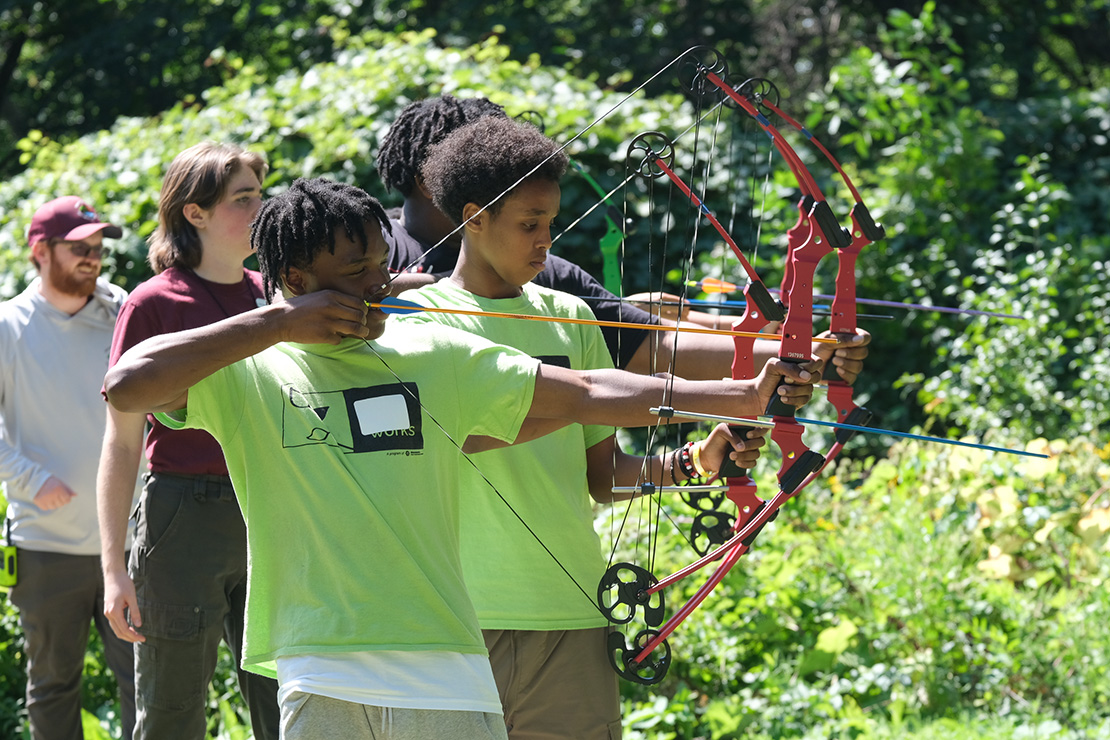
Last month, Environmental Initiative and Collaborative Pathways members brought together more than 100 Twin Cities youth for a mix of outdoor activities and career-focused learning in its first ever Youth for Earth Conference at the Minnesota Valley Wildlife Refuge in Bloomington. The day combined career development, including a lively morning panel of environmental professionals, with hands-on outdoor education like archery, scavenger hunts, and plant identification.
The conference was co-designed by nonprofit staff and a committee of youth advisors. “It was important for us to have youth leading and shaping the day,” said Rachel Geissinger, conference lead from Environmental Initiative. “The youth advisors came to our planning sessions with activity ideas, the kinds of careers they wanted to learn about, and of course options for food. This event would not have been as successful without them and their leadership.”
Most conference attendees arrived through paid internship or career pathways programs like Roots for the Future, Minneapolis Park Board Teen Teamworks, and the Mississippi Watershed Management Organization’s Mississippi River Green Team. Roughly 60-70% of participants were BIPOC. For youth whose programs had ended or who otherwise would not have been paid that week, the Coalition provided $75 gift cards and made the event free to attend—an intentional step to remove financial barriers to participation.
Activities were designed to be both fun and informative: archery and other outdoors options drew the biggest sign-ups (truth: shooting arrows beats a networking how-to workshop), while a morning panel of environmental professionals sparked strong engagement and questions from youth. The group plans to repeat the career panel in future years as well as consider staggered sessions so popular outdoor activities don’t compete with career development tracks.
What’s next for Collaborative Pathways
The Collaborative Pathways Coalition hopes to host this event again in 2026, building on this summer’s recent success. In addition to this annual conference, the Coalition has mapped out a calendar year of potential offerings including:
- Resume-writing and mock interview sessions timed to prepare for spring internship recruitment periods.
- Events to connect youth across various career pathways and internship programs to build and strengthen relationships and networks.
- Culturally responsive and trauma-informed staff training for pathways members working with youth.
Environmental Initiative staff and Collaborative Pathways members are also seeking to build and strengthen relationships with the private sector so youth can get connected to and explore roles in corporate sustainability, consulting, law, environmental health and safety, and more.
Get involved
If you are interested in supporting the Youth for Earth Conference in 2026, or participating in the Collaborative Pathways Coalition’s efforts, reach out to Sacha Seymour-Anderson for a conversation or to learn more.
Environmental Initiative convenes the Collaborative Pathways Coalition — a network dedicated to nurturing education and career development for youth and young adults so everyone, regardless of background, can become environmental stewards in a sustainable, equitable world.
Collaborative Pathways members include: City of Lakes Loppet Foundation, Environmental Initiative, Freshwater Society, Friends of the Mississippi River, Great Plains Institute, Metro Blooms, Minneapolis Park Board, Minnesota/Iowa Conservation Corps, Mississippi Watershed Management Organization.
Our sincere thanks to the following organizations for supporting and participating in the 2025 Youth for Earth Conference: City of Lakes Loppet Foundation, City of Minneapolis, Conservation Corps, Emmons & Olivier Resources (EOR), Freshwater Society, Friends of the Mississippi River, Great Plains Institute, Hennepin County Energy & Environment, High School for the Recording Arts, Lakewinds Natural Food Coop, Metro Blooms, Minneapolis Health Department, Minneapolis Park & Recreation Board, Minnesota Department of Health, Minnesota Department of Natural Resources, Minnesota Valley National Wildlife Refuge, Mississippi Park Connection, Mississippi Watershed Management Organization, North Hennepin Community College, Northside Residents Redevelopment Council, Seward Coop, Spark-Y, Wilderness Inquiry.