
Tribal-led outreach combats wood smoke pollution
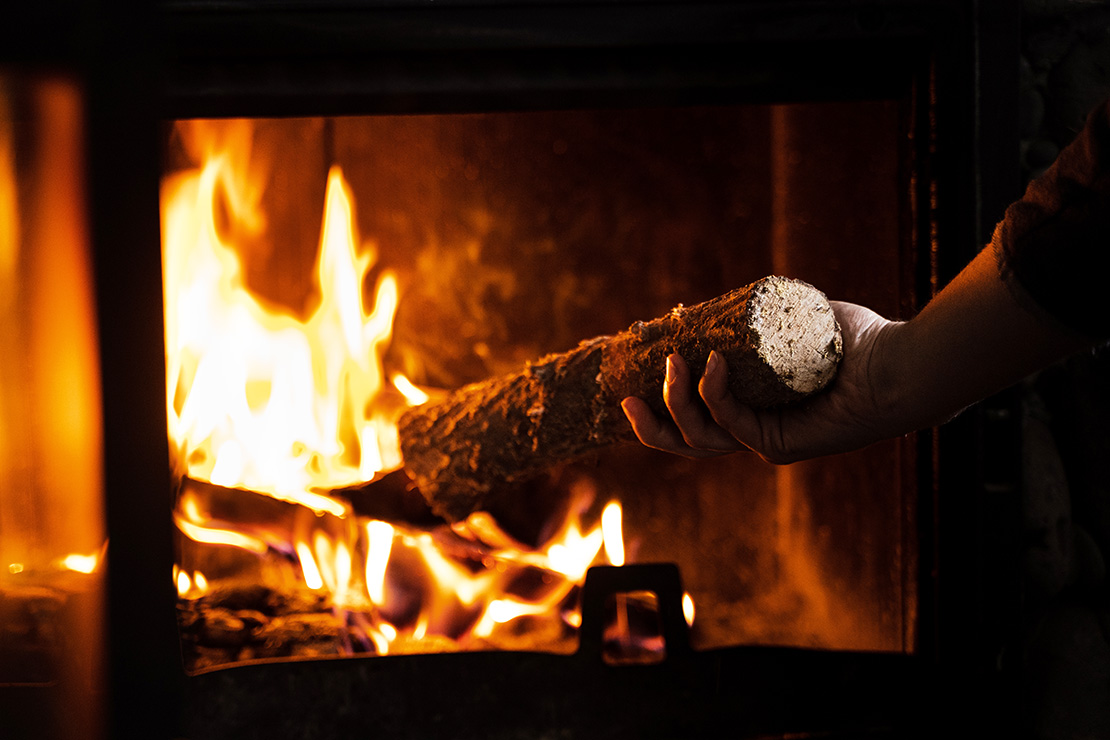
Through Project Stove Swap, members of the Leech Lake Band of Ojibwe and Fond du Lac Band of Lake Superior Chippewa are helping reduce air pollution from wood smoke in their homes and communities. Ten older wood burning appliances have been swapped at a discount for newer, less polluting models.
Project Stove Swap is a voluntary program led by Environmental Initiative and supported by funding from the Minnesota Pollution Control Agency (MPCA).
Tribes join the partnership
Since 2017, Environmental Initiative has partnered with more than 15 local appliance vendors to help Minnesotans replace older, inefficient wood-burning appliances. More than 550 stoves have been swapped across northern Minnesota through this effort.
In recent years, the organization began working more closely with tribal governments — starting with existing partnerships with the Fond du Lac Band of Lake Superior Chippewa and the Leech Lake Band of Ojibwe. That collaboration has now expanded to serve members of the White Earth Nation.
“We wanted to build on our track record of making it easy for residents to participate in our work,” said Alex Keilty, senior partnership manager. “Our tribal partners are a big reason for Project Stove Swap’s ongoing success.”
Deeper engagement with tribal members has been possible thanks to the on-the-ground outreach and relationship-building by people like Carma Huseby, air quality specialist at Leech Lake, and Paige Huhta, air program coordinator at Fond du Lac. They have played key roles in reaching out to residents, answering questions, and guiding participants through the process.
“Safety is a big challenge people face,” Carma said. “I’ve seen stoves with no doors, or bungee cords used to hold them shut. This program makes homes safer in addition to the air quality benefits.”
On the Fond du Lac Reservation, seven stoves have already been replaced. Paige says many of the issues she hears about involve broken fans, damaged doors, and the high cost of repair. But the benefits go beyond the equipment.
“A new stove gave one person the motivation to update their woodshed too,” she said. “People feel good about making their homes safer and more efficient.”
Both Carma and Paige encourage anyone who’s eligible to apply.
“There’s a short application, you talk to real people, and the turnaround is quick,” Paige added. “If you’re thinking about it, throw in an application.”
Why be concerned about wood smoke?
Air pollution is often cast as an urban issue, only affecting people who live in cities. But in Minnesota, 57% of direct fine particle emissions come from wood burning, and most of the residential wood burning for home heating occurs in the northern part of the state. This creates both indoor air quality challenges and contributes to outdoor air pollution.
Wood smoke is a mix of gases, soot, and chemicals. These fine particles are small enough to be absorbed by the lungs and enter into the bloodstream, which can cause a variety of health concerns, especially in children, the elderly, and people with existing heart, lung, or upper respiratory conditions.
Collaborative solutions for cleaner air
The MPCA has very little enforcement authority to address air pollution from wood smoke because homes and individual appliances are not regulated in the way power plants and larger industrial facilities are. Instead, the agency works to reduce wood smoke pollution through best practice sharing and investment in voluntary programs like Project Stove Swap.
“We’re proud of this program because it provides financial assistance to tribal members who need it most,” said Tyler Ellis, Air Toxics Risk Assessor at the MPCA. “This is one major way the agency can help make a dent in fine particle pollution coming from wood-burning in communities that really rely on it as a heat source.”
Get involved
Appliances manufactured before 1992, used as a primary or major heat source in a household, and that consume at least two cords of wood annually are eligible for the program. Equipment includes wood stoves, hearths and fireplace inserts; pellet stoves and inserts; and indoor wood furnaces, forced‑air furnaces and hydronic heaters.
Tribal members interested in upgrading their old stoves can learn more on our website and reach out to Alex Keilty, senior partnership manager, with questions or to get started.