
How one Minneapolis parish is cutting emissions and improving comfort
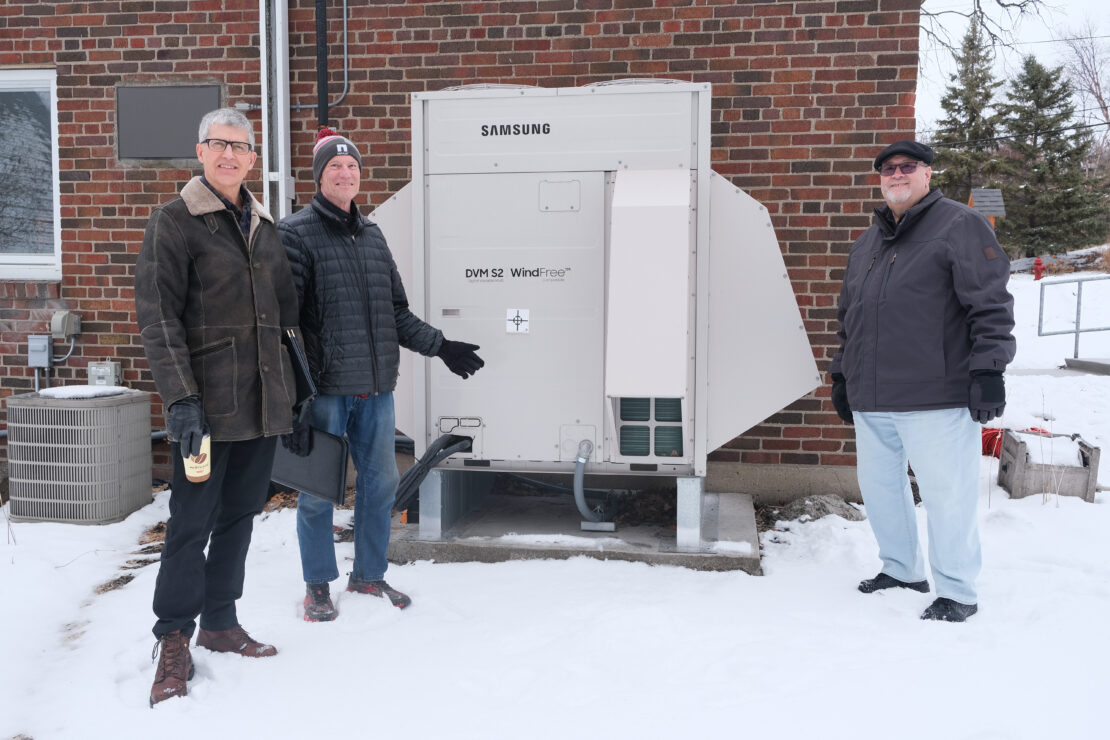
For many faith communities, talking about sustainability can feel abstract, but at the Church of St. Frances Cabrini in Minneapolis, those conversations have turned into concrete actions. A recent renovation showed how practical changes can be introduced to older buildings to reduce emissions and improve comfort.
Late last year, Cabrini received a Green Cost Share grant from the City of Minneapolis to install a variable refrigerant flow (VRF) system—a high-efficiency electric heat pump that both heats and cools the building. The project is one step in the parish’s broader goal of reaching a Net Zero pathway by 2035.
This upgrade is expected to reduce the parish’s energy use by 16.6% and cut annual greenhouse gas emissions by approximately 19.74 metric tons though reduced demand on its natural gas-fired boiler.
Cleaner energy, better comfort
Cabrini’s sustainability work didn’t begin with this project. Parish leaders and members began discussing ways to reduce their carbon footprint several years ago, with early efforts dating back to around 2018. When plans for a building renovation began to take shape, parishioners saw an opportunity to go further by reducing their reliance on their old gas boiler.
Jointly funded by Green Cost Share and significant fundraising within their community, the newly installed VRF system works by moving heat rather than generating it, pulling warmth from outside air in the winter and removing heat in the summer.
The difference has already been noticeable for staff. Before the upgrade, some offices relied on aging wall units or fans to stay comfortable. Now, temperatures are more consistent throughout the space, and for the first time, parts of the building have central air conditioning.
“January was the coldest we’ve had in several years,” began Michael Darger, an extension specialist at the University of Minnesota and member of Cabrini’s Care for Creation team, which helps respond to the desire and need to be good stewards of the environment. Father Mike Krenik picked up, “We’ve never had any issues about being too cold in here. I would say, even during the coldest week of the year—the negative 10 degrees that one Friday—no one had any issues at all.”
With staff warm inside, and reduced energy use and greenhouse gas emissions, the parish is well-positioned for a cleaner grid as they integrate more carbon-free energy sources. Moving away from natural gas also helps protect against future energy cost volatility, and improved efficiency strengthens the parish’s ability to remain open during extreme weather, ensuring they continue to be an accessible community resource when it’s needed most.
Making the change
Like many organizations, Cabrini faced questions about cost and feasibility. Systems like VRF are more expensive than a traditional system, can require a large upfront investment, and come with technology unfamiliar to many. “No one really likes change that much because there’s a system risk involved,” commented Darger. “Going to this VRF, people were asking ‘What is that? How does that work? Does anyone I know have it? What if it sucks, you know?’”
Support from Environmental Initiative and the City of Minneapolis’ Green Cost Share Program helped address those concerns. With application help from partnership manager Eben Kowler, Cabrini received a $20,000 grant, which helped make the project more feasible and provided reassurance that the parish was making a sound investment. “When you get a skeptical group of people, they really like seeing the grant. It’s a form of validation, like ‘Okay, we’re not crazy for doing this.’” Darger said.
The work was led by Cabrini’s Net Zero Team in partnership with parish leadership, building on a 2023 energy audit and a 2024 greenhouse gas inventory that identified HVAC upgrades as a critical early step.
Still, leaders emphasized that the biggest shift was in perspective. Members questioned why leadership would devote time and money to fix a system that appeared to be fine. “They see it as not broken, and that becomes the thing that we can say: It is broken because it has effects beyond our little church,” said Krenik. “It is broken whether we want to admit it or not.”
“We were part of the problem,” added Jim Polakowski, a member of the parish council and Care for Creation Team. “We still are.”
“But we are taking steps that we can when we can,” finished Krenik.
Looking ahead
The team’s broader commitment to the environment is shaping the parish’s future. Polakowski mentioned they are beginning to attract more young families, drawn in part by the church’s forward-looking approach.
As they celebrate their progress, the parish still plans to address its largest remaining emissions source: heating the main worship space. Each plan builds momentum toward their 2035 Net Zero goal.
“This isn’t a baby step—it’s a medium step,” Darger said. “But that medium step gives us confidence for the big step, whenever that happens.”
Interested in applying for Green Cost Share? Applications will re-open in 2027 with review at multiple points throughout the year. Interested businesses can reach out to [email protected].
###
About Environmental Initiative
Environmental Initiative is a Minneapolis-based nonprofit fostering public-private partnerships to deliver environmental outcomes on air, land, and water through deep relationships with communities, grassroots, companies, and governments.
About Church of St. Frances Cabrini
The Church of St. Frances Cabrini, known by members simply as Cabrini, is an urban Catholic community with strong traditions of inclusivity and social action. Cabrini has 355 member households, ranging from infants to elderly senior citizens.
About the City of Minneapolis Green Cost Share Program
The Green Cost Share Program helps businesses pay for upgrades that save energy, reduce air pollution, and cut emissions.