
At Washburn-McReavy, going electric is about more than reducing emissions
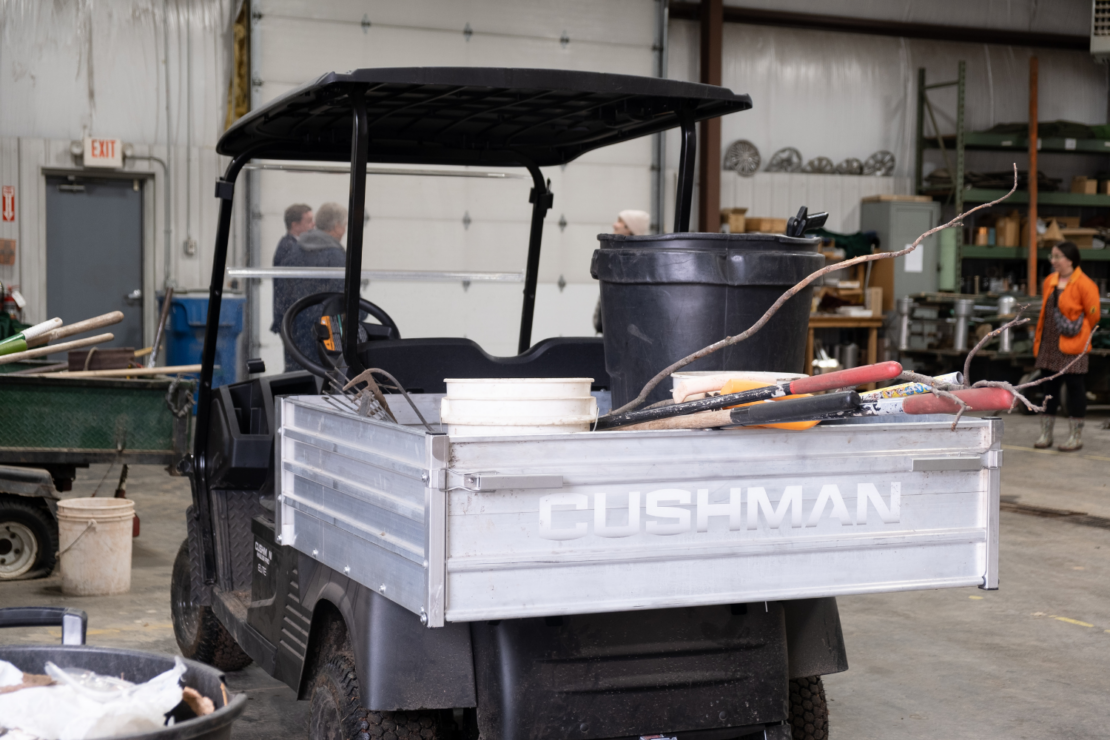
When Washburn-McReavy Funeral Chapels, Cemeteries and Cremation Services began exploring electric replacements for their gasoline-powered utility vehicles, their primary concern was whether the newer technology could simultaneously support the cemeteries’ long-term sustainability goals and meet the demands of their busy operations.
Swapping out four vehicles would eliminate around 13.5 tons of greenhouse gas emissions and 55.6 pounds of volatile organic compounds per year. However, many employees were long-time users of diesel and gasoline equipment. The grounds crew spends their days maintaining hundreds of acres, transporting materials, and moving between sites, so, their big question was: Would the new vehicles be as reliable as the older ones?
“Going from gasoline power to electrical required quite a bit of a mindset shift for them,” said Jon McReavy-Seitz, president and chief operating officer of Washburn-McReavy. “A lot of people can be skeptical of switching to electric, and [wonder] ‘Does it have the power? How long do the batteries last?’”
The concerns were familiar. The Crystal Lake location spans 120 acres, and Hillside reaches 100; a dead battery in the middle of a shift could significantly slow their work. Fortunately, after spending time with the equipment, these worries would quickly subside.
MAKING THE TRANSITION
Washburn-McReavy was researching Cushman-brand replacement vehicles when they learned about the City of Minneapolis Green Cost Share Program. Soon after, they connected with Environmental Initiative’s Clean Air Assistance Project, and partnership manager Eben Kowler helped guide them through the application process.
For McReavy-Seitz, who had never applied for a grant before, the support made a significant difference.
“I would say it was unbelievably smooth,” he said. “Eben held my hand. He handled the application. The whole time I’m wondering, ‘What is Eben and [his] group getting out of this for just doing all the work for us?’ It couldn’t have been easier.”
With a $29,480 grant secured, Washburn-McReavy moved forward with purchasing the electric utility vehicles. Once they arrived—both Crystal Lake and Hillside received two—employees had a chance to test them out, and opinions began to change.
“The guys were a little skeptical, but once the Cushmans got here and they were able to use them, they liked them a lot,” McReavy-Seitz said. “They’re fast, they’re powerful.”
The vehicles quickly became part of the staff’s daily routine. As they’ve transported tools, supplies, and materials during their eight hour shifts, performance has not been an issue.
McReavy-Seitz also recognized decreased maintenance as an immediate benefit. Gasoline-powered equipment requires regular oil changes, filter replacements, fuel management, clean up, and repairs. Electric equipment simplifies many of those tasks and reduces the number of moving parts that can fail.
Because the vehicles are still relatively new, Washburn-McReavy is continuing to evaluate long-term costs and savings. They expect maintenance reductions to ultimately provide some of the greatest returns.
“There are benefits on the environmental side,” said McReavy-Seitz. “On the business side, there are benefits. And for the guys using them on the getting from point A to point B faster, there are benefits. There’s something for everyone.”
AN UNEXPECTED IMPROVEMENT
Still, one of the greatest advantages might be less obvious: a quieter cemetery.
Cemeteries serve a unique role as a permanent green space in their communities. On any given day, grounds crews are maintaining the property while family visits take place nearby. For McReavy-Seitz, the hushed operation of electric vehicles has emerged as one of the biggest advantages in creating a peaceful environment.
“The electric carts are—I don’t know by decibel how much quieter they are, but a lot,” he said.
The difference is especially noticeable during a service, when the sound of traditional engines can be disruptive.
“They can be driving around and you don’t hear the driving by a burial,” said McReavy-Seitz. “That’s a huge factor of the electric.”
The improved equipment helps preserve the atmosphere families expect while also creating a more comfortable work environment for staff throughout the day.
The positive experience has also encouraged the cemeteries to think bigger. McReavy-Seitz hopes future improvements in battery technology will make it easier to electrify additional equipment, from leaf blowers and trimmers to commercial mowers and eventually larger vehicles.
LOOKING BEYOND THE CEMETERY GATES
As McReavy-Seitz continues evaluating future opportunities to electrify equipment and improve operations, the success of these first vehicles has provided confidence for what comes next.
This project is one piece of a larger effort to reduce pollution and prepare for a changing climate. As an example, McReavy-Seitz pointed to changes he has observed firsthand during his lifetime, particularly in Minnesota’s winters.
“When I was young, there were huge snowstorms, massive amounts of snow, cold winters,” he said.
Today, he sees noticeably different conditions.
“I remember four years ago, I think I was golfing in January,” he said. “Getting two electric carts at Crystal Lake Cemetery isn’t going to fix the problem, but it’s a start.”
Interested in applying for Green Cost Share? Applications will re-open in 2027 with review at multiple points throughout the year. Interested businesses can reach out to [email protected].
###
About Environmental Initiative
Environmental Initiative is a Minneapolis-based nonprofit fostering public-private partnerships to deliver environmental outcomes on air, land, and water through deep relationships with communities, grassroots, companies, and governments.
Washburn-McReavy Funeral Chapels, Cemeteries and Cremation Services
Proudly serving Minnesota for over 165 years, Washburn-McReavy Funeral Chapels, Cemeteries and Cremation Services is the state’s oldest and largest independent funeral establishment. Family-owned and operated across generations, they remain dedicated to honoring lives with compassion, dignity, and personalized service.
About the City of Minneapolis Green Cost Share Program
The Green Cost Share Program helps businesses pay for upgrades that save energy, reduce air pollution, and cut emissions.