
An Uptown Minneapolis auto body repair shop is proving cleaner air starts in the garage
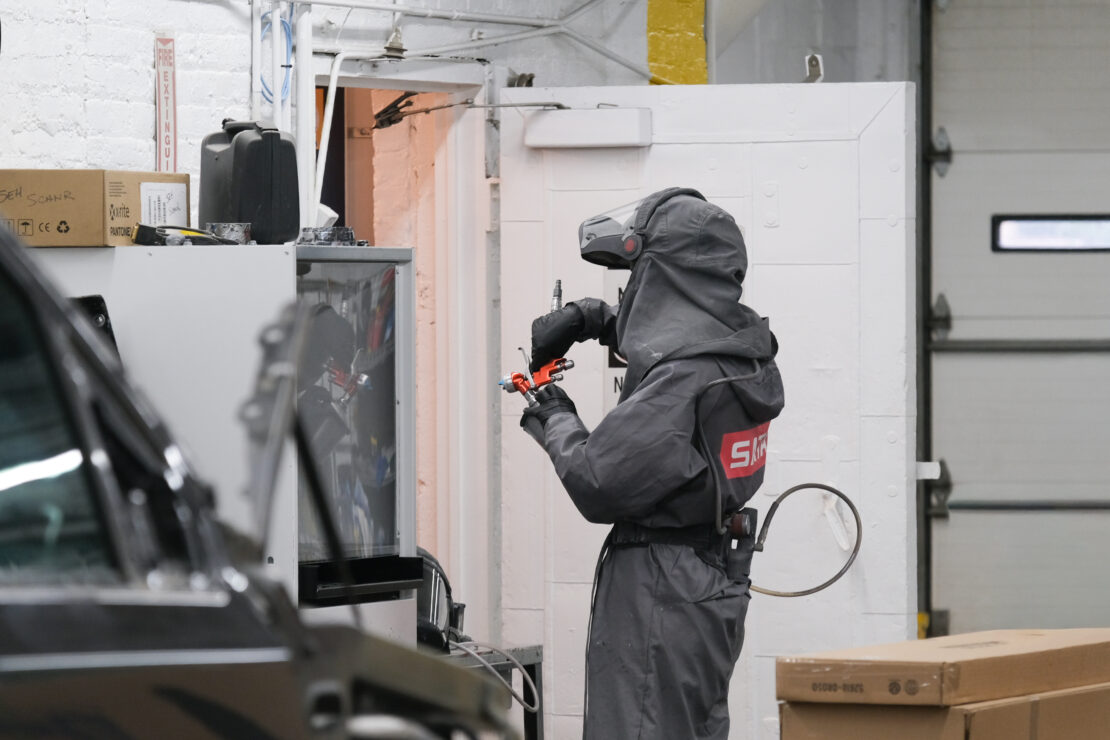
Paint from industrial spray booths is a hidden source of pollution in neighborhoods across the country, but one longtime Minneapolis business is showing how small shops can have a big environmental impact with the right support and commitment.
Hagen’s Auto Body, a family-run auto body repair shop serving the city since 1950, recently completed a major transition to water-based paint. Thanks to Environmental Initiative’s Clean Air Assistance Project and the City of Minneapolis Green Cost Share Program, this switch created a safer, more productive work environment and significantly reduces emissions of volatile organic compounds (VOCs) by nearly 793 pounds annually. This reduction is equal to around 13 cars per year.
The Impact of VOCs
VOCs are gases commonly emitted from processes and products like pesticides, gas and wood burning, and traditional auto paints and solvents. They can cause respiratory problems, damage to internal organs, and, in some extreme cases, cancer. Studies by the EPA show that elevated VOC levels can linger both indoors and outdoors long after products are used—affecting not just workers, but entire neighborhoods.
“Anything that gets painted ends up being in our atmosphere and can end up in the farthest corners of the world,” commented Todd Grothe, field expert and independent inspector hired by the City of Minneapolis. Even remote regions like Mount Everest experience pollution similar to industrialized cities, he added.
While paint fumes are the biggest pollutants in auto body shops, they can be safely contained with proper filtration and techniques. Hagen’s transition improved air quality in their building and community.
Cleaner Paint, Cleaner Air
With support from Environmental Initiative, the shop applied for and received $50,000 in Green Cost Share funding to help replace solvent-based paints with low-VOC, water-based alternatives. Upgrades included:
Installing a new spray booth heat system and air make-up unit to improve airflow, reduce maintenance, decrease energy use, and improve performance.
Replacing the downdraft system with a custom pit, which features steel grating, diffuser pans, and wire grids to improve air circulation and booth safety.
“What we’re really here to do is help people—that’s the way I look at it. I want to create good jobs for them, you know? I think I have an obligation as an owner to do that and give them a safe place to come to work and feel like somebody cares,” said owner John Hagen of his employees. “My customers want to see this, too—that we’re living up to our responsibility of being a good citizen in the city.”
The new products are also more user friendly, require less disposal of hazardous waste, and can be a closer match to the paint types used by car manufacturers. In the long run, Hagen sees these changes as increasing productivity.
Hagen’s Shows Investment
Alongside the paint booth upgrade, Hagen voluntarily invested some of his own resources into the facility. Methods such as investing in UV primers, respirators, and vacuum sanders allow for both cleaner air and increased employee protection.
Hagen saw all these changes as necessary for creating a more sustainable workplace despite the upfront cost.
“I look at business as a long-term investment. You’re not always going to see return on your investments today or next year—it might take years to get that back,” he said. “You got to be in it for the long run, not the short. If you look at everything short, it’s never, ever going to feel good. I’m all good with what we did.”
For businesses on the fence, Grothe added, “Any potential or perceived downsides of using waterborne paint only last until people are fully informed. They’re afraid that it’s going to be expensive, and they’re afraid that their painters aren’t going to be able to adapt to the new techniques, and with a little bit of information, those fears are quickly absolved.”
Opportunities with Green Cost Share
Right now is a good opportunity for shops to consider a switch. A recent Minneapolis ordinance requires automotive paint facilities to use waterborne or low-VOC base coats or purchase less than 150 gallons of products with VOCs per calendar year. Enforcement will begin in September 2026.
For businesses ready to start planning, the City of Minneapolis’ Green Cost Share offers up to 75% of project costs, capped at $50,000. Owners are encouraged to prepare in advance—2025 application cycles closed early when the program reached full capacity halfway through the year.
“So far, every one of the shops that switched over has been glad they did it, so we’re at a 100% satisfaction rate,” said Grothe.
The program was well worth the investment at Hagen’s. Staff at Environmental Initiative, like partnership manager Eben Kowler, made the process easy by helping navigate the grant application process at no cost.
“I have nothing negative to say. It went so well,” Hagen commented. “Eben was great to deal with—he was for the whole process. The City was good—just the whole process worked really well. When the time came, we got it done.”
2026 applications will be accepted on an ongoing basis, with review at multiple points throughout the year. Interested businesses can reach out to [email protected].
###
About Environmental Initiative
Environmental Initiative is a Minneapolis-based nonprofit fostering public-private partnerships to deliver environmental outcomes on air, land, and water through deep relationships with communities, grassroots, companies, and governments.
About Hagen’s Auto Body
Hagen’s Auto Body is a family-owned and operated auto body repair shop that is currently located in the Uptown area of Minneapolis. Their goal is to provide high-quality, friendly, and convenient service.
About the City of Minneapolis Green Cost Share Program
The Green Cost Share Program helps businesses pay for upgrades that save energy, reduce air pollution, and cut emissions.