
Modernizing the fleet without taking on all the risk: a Q&A with Errol Rice, President of Transystems
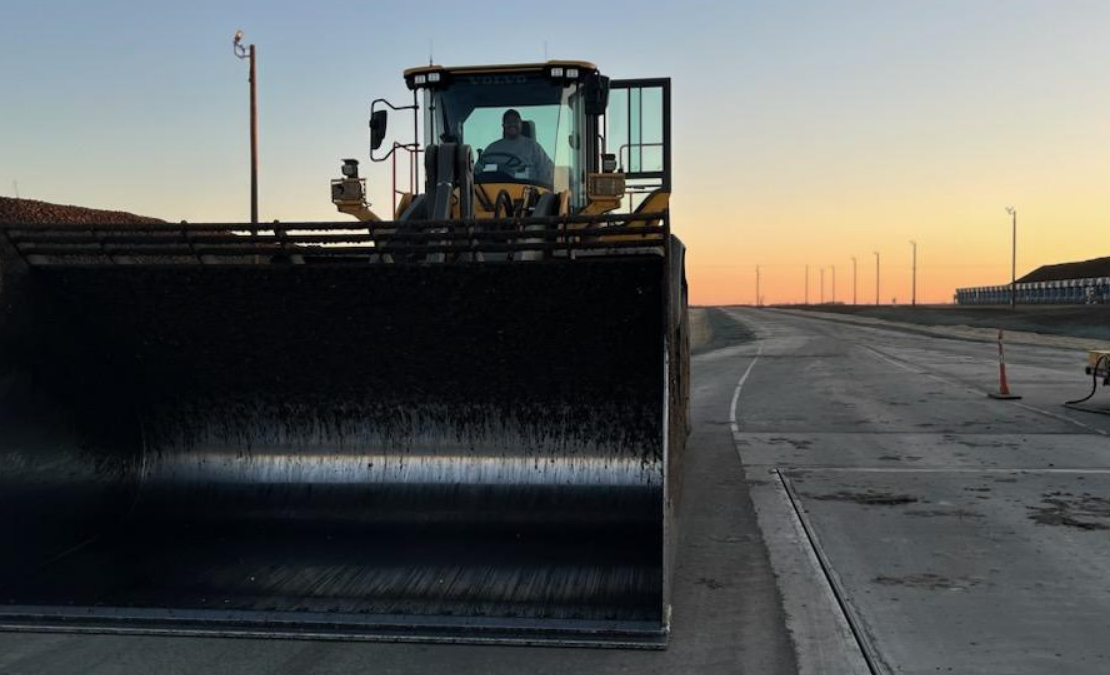
For more than 80 years, Transystems has been loading and hauling sugar beets for Co-Op customers across North Dakota, Minnesota, and Idaho – a business now in its third generation of Rice family leadership.
John Rice founded the company in 1942. His son Dan serves as chairman of the board today, and Dan’s son Errol is president.
It is demanding, round-the-clock work in tough conditions—and the equipment has to perform. As a fleet participant in an Environmental Protection Agency (EPA)- and Volkswagen settlement-funded emissions reduction program, Transystems had the opportunity to modernize its fleet without taking on all the financial risk. We spoke with Errol about how the process worked and what it meant for the business.
Thank you so much for taking the time to speak with us, Errol. Let’s start with the work itself — can you give us a sense of what Transystems’ operations look like, and what your fleet means to your business?
We load and haul sugar beets for several Co-Op customers in North Dakota, Minnesota, and Idaho. We need to be able to run our loaders around the clock in tough conditions in fairly remote locations. During our campaign — September through about April or May — we can put several thousand hours on a machine. The equipment has to work. There’s no margin for downtime.
What initially led you to look into upgrading with clean diesel technology?
We were referred by one of our equipment dealers, Nuss. Once we looked into it, the process was straightforward — it let us modernize our fleet without taking a huge risk on a new technology machine. There’s actually a big demand for older machines right now because of some of the DEF and aftertreatment issues in newer models, so this program helped us mitigate some of the risk of switching.
Were there any internal hurdles to getting buy-in?
Honestly, our team was on board right away. They understood the benefit of getting newer machines in place. Beyond the emissions piece, the newer equipment requires less maintenance spending, which matters a lot to our fleet operations. That made it an easy sell internally.
What were the biggest challenges?
The timing on when the state releases funds was a little bit of a black box — that was probably the biggest uncertainty. But Bill and Alex kept us informed throughout the process, which made a real difference.
How much does the environmental side of this matter to you?
We’re pretty low profile about what we do, but it was nice to be able to switch to a cleaner piece of technology. Our customers’ customers have a lot of green initiatives in place, and we want to help them meet those goals. The agricultural side of these supply chains is energy intensive — whatever we can do to contribute is a positive.
Do these upgrades help you stay competitive?
We’re always looking to modernize and stay as cost competitive as possible. All commodity pricing is taking a beating right now, so if we can upgrade our fleet and efficiency without passing a cost increase on to our customers, that matters a lot in this pricing environment.
How does this kind of investment fit into the longer-term picture for Transystems?
We’ve seen some big swings in crop yields at our Minnesota locations the past few years. This program helped bring the cost of updating equipment down, which lets us weather some of the down crops we’ve seen — in both volume and pricing. And when production ramps back up, we’ll be well positioned with newer equipment to take advantage of it.
You received multiple rounds of funding rather than one lump sum. How did that shape what you were able to do?
That structure worked really well for us. Having a few rounds of grants rather than one big grant meant we could replace equipment without concentrating too much risk on one vintage or model. It let us get closer to our typical upgrade schedule — matching what we’d want to see from a regular equipment cycle rather than making one big, high-stakes move.
How critical was the funding overall?
Huge. It allowed us to make more aggressive moves toward newer, cleaner machines than we would have right after a few tough COVID years. It changed what was realistic for us.
Can you walk us through what the process looked like — from planning to implementation?
The program itself was simple to implement. Having someone walk us through the paperwork was extremely helpful, though. It’s not taxing, but it does require exact details and pictures. Bill and Alex at Environmental Initiative were a tremendous help in making sure everything was filled in correctly and our submission was in good shape.
What role did Environmental Initiative play in the process?
EI was a fantastic help — guiding us through the documentation and keeping us in the loop on process and timing. There was a lot of communication between us, EI, and our dealer partners to make sure everything was going to work, and EI made sure we were always heading in the right direction.
Why is it important for programs like this to continue?
These programs expose companies to upgraded technologies without requiring them to take on 100% of the pricing risk of a new machine. What we really liked about this one is that it was a like-for-like trade — same type of machine, just with cleaner emissions. Some programs push you toward a different tier of equipment or a less proven technology, and that’s a harder sell. We still have to make sure these machines work in the real world. That’s why this program hits a sweet spot.
What would you tell a company that’s on the fence about a program like this?
The program is easy to navigate, and the payback is pretty rapid. There’s the satisfaction of cleaning up your fleet. And since this targets older machines, there’s a good chance you’ve been dealing with a lot of recent maintenance costs on those — so there’s real satisfaction in drilling a hole in the block and being done with it forever.
Beyond that: this program, along with guidance from EI, takes a lot of the risk out of switching. We were able to make the move knowing we didn’t have 100% of the price risk if the technology didn’t pan out. The timing worked well too — equipment was in place before our processing campaign started, and we didn’t have to pull the trigger on financing before the grant funds came through. Having a few bites at the apple over a few years let us get comfortable with the new machines without taking too big a risk on fleet concentration.
It’s a great program. It takes a lot of risk off your plate. And after you do it once and it works well, it’s definitely something you want to be a part of again.
Interested in seeing if your business qualifies for a Project Green Fleet grant? Reach out to Alex Keilty →
About Environmental Initiative
Environmental Initiative is a Minneapolis-based nonprofit fostering public-private partnerships to deliver environmental outcomes on air, land, and water through deep relationships with communities, grassroots, companies, and governments.
About Transystems
Transystems is a third-generation, family-owned transportation company that has been loading and hauling sugar beets across the northern U.S. since 1942. Today, they move more than 70 percent of the sugar beets produced in the United States — and they’re still family-run.
About Project Green Fleet
Project Green Fleet is a collaborative initiative led by the nonprofit Environmental Initiative that partners with fleet owners to reduce diesel emissions. It upgrades or retrofits older heavy-duty vehicles, school buses, and off-road equipment with cleaner technologies.
Projects are supported by the Minnesota Pollution Control Agency’s Volkswagen settlement-funded Clean Heavy-Duty Vehicle Grant Program and federal Diesel Emissions Reduction Act funding from U.S. EPA Region 5, along with investments from private partners such as Flint Hills Resources and Minnesota Power. Together, this support helps businesses reduce emissions without having to assume full financial risk.