
Five steps to reach farmers faster (and more effectively)
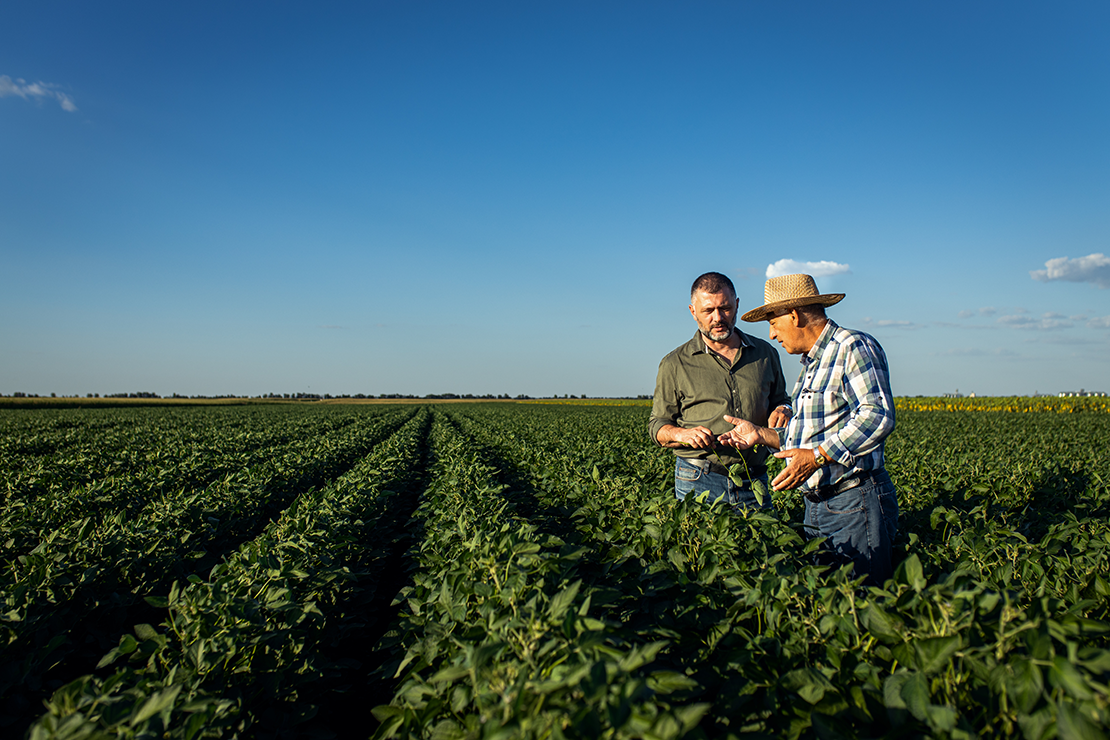
With resources for conservation in agriculture tightening across the country, garnering interest and enrollment in programs needs to be more efficient and effective than ever before. A producer’s decision to implement a conservation practice is a deeply personal one, tied to the health of the land and the overall economic health of the farm system.
If you want to connect with producers and support their stewardship efforts, especially now, here are five steps to get there faster and with more impact:
1. Establish goals
One of the keys to a successful outreach strategy is being as specific as possible about what success will look like from the beginning. We recommend using the SMART framework for goal-setting. Consider the questions below as you brainstorm and draft your goals.
- Specific: What will be accomplished?
- Measurable: How will you measure your success?
- Achievable: Is the goal doable? Do you have the necessary skills, time, and resources?
- Relevant: Why is the result important to your program?
- Time-bound: What is the timeframe for accomplishing the goal?
Let’s pretend you work at a conservation district hosting three to four field days a year on cover crops, and you are trying to engage producers who have never attended before. Your goal might be:
Recruit at least 30 producers from three counties to attend our cover crop field day on Sept. 15. Ensure at least 5% of the producer audience has never attended a field day with our organization before.
Our goal-setting tool can make it easier to assess if your outreach efforts for the field day were successful.
Download the goal-setting worksheet →
2. Understand producers
One of the most common (and costly) missteps in outreach is assuming all farmers think alike. You’ve probably heard the phrase “know your audience” before, and it’s just as critical when you’re encouraging conservation practice adoption. Producers bring a wide range of motivations, values, and pressures to the table, shaped by personal experience, economic realities, and their relationships to land and community.
To better understand the producers you’re trying to reach, start by reviewing available data sources like USDA Census of Agriculture, local property records, or third-party datasets from organizations like Farm Journal’s Trust in Food™ . You might also consider setting aside time to gather producer insights yourself. Think about what you know from your own experiences, host informal conversations, schedule interviews, or bring together small focus groups of producers. Don’t forget to include local agronomists, conservation professionals, and extension agents—they often have a pulse on what’s top-of-mind for producers in your region.
Once you’ve collected insights, analyze them for patterns: What keeps these producers up at night? What motivates them to try something new? Use what you learn to build personas—fictional but research-grounded snapshots of the kinds of producers you’re engaging. Keep those personas in front of your mind as you start to think about messages and methods to reach them.
Download the worksheet to develop your producer persona →
3. Develop messages
Now that you have a baseline understanding of your audience, decide what to say and how you want to say it. In conservation agriculture, we are often (justifiably) focused on the environmental outcome of the behavior change we’re striving towards. In designing outreach, however, we must consider that the outcome which matters to us might not be the outcome that motivates a producer to make the change we seek.
The most effective messages are grounded in what matters most to the producers you are trying to reach. Your key messages should be clear, compelling, and aligned with the benefits of your program. For example, if your program saves time and your producers are stretched thin, lead with that. If producers in your project area are concerned about succession planning, focus your message on protecting the future of the farm.
It’s important to remember that producers are not monoliths. It’s okay to try different messages that lead with different value propositions or themes. Storytelling, testimonials, data, and emotion can make the alignment between your program goals and producer values clearer, helping your messages stick.
Get started developing your messages →
4. Choose engagement
Now that you have messages you think will resonate with your producer audience, the next step is to decide how to deliver them. Ask yourself, “Where are producers in my area spending their time, virtually and in-person? What media are they reading, watching, or listening to? Are there trusted messengers in my community that might help deliver my messages?”
Start by matching possible channels with your producer persona. If they’re podcast listeners, that’s a clue. If they show up at the co-op bulletin board or the county fair, that’s another. A multi-channel strategy that uses digital and traditional tactics will help you cast a wider net while staying personal.
Could you create a short video explaining the benefits of a practice? A calculator showing cost savings? The more your content reflects your producers’ interests and questions, the more likely it is to drive action.
And if your team is short on resources, look to partnerships. University extension agents, local agronomists, and farm organizations can amplify your message with built-in trust.
Download the worksheet to choose your engagement methods →
5. Assess impact
Let’s be honest: evaluation doesn’t always get the time and attention it deserves. The upside is that by setting a SMART outreach and communications goal, you’re halfway there.
If we return to our conservation district example where we’re trying to bring new producers to the field day, evaluation might look something like this:
- Did we get 30 producers and were at least 5% of them new attendees?
- Which channels led to field day sign-ups?
- How did producers and partners find out about the field day and what feedback are they giving us?
Evaluating your efforts doesn’t have to be a herculean task. By starting small, establishing a baseline, gathering data, and being accountable for the outcomes, you can use what you learn to inform future outreach efforts.
Explore steps to assess your impact →
Outreach and training support
Environmental Initiative and Trust in Food™ have been working in partnership since 2021 to design and test data-driven approaches to connect with producers about conservation agriculture in new ways. Together, we developed a web-based tool to share results from outreach with corn and soy producers across three states, and to support organizations in designing data-driven outreach and engagement strategies that more rapidly motivate producers to connect to conservation agriculture programs and resources.
Three-hour, in-person outreach design workshops using this five-step outreach methodology are available to teams and small groups. Contact Deborah Carter McCoy for more information and rates.